Sampling that holds up to scrutiny
Air samples are only as useful as the method. We document locations, time, basic environmental conditions, and how the HVAC was operating so the lab results can be interpreted correctly.
Serving Mission Viejo, California & surrounding areas
Mon–Fri 8am–6pm Sat 9am–2pm
Air sampling service · Mission Viejo
Get clear, lab-backed results for airborne mold and indoor air concerns, plus practical next steps you can act on.
A clear starting point
If you are searching for indoor air quality testing Mission Viejo, you likely have a specific concern: a musty odor that comes and goes, irritation that improves when you leave the house, or worry after a leak, plumbing issue, or HVAC problem. Air testing does not guess. It measures what is in the air at the time of sampling and turns that into a report you can use for decisions.
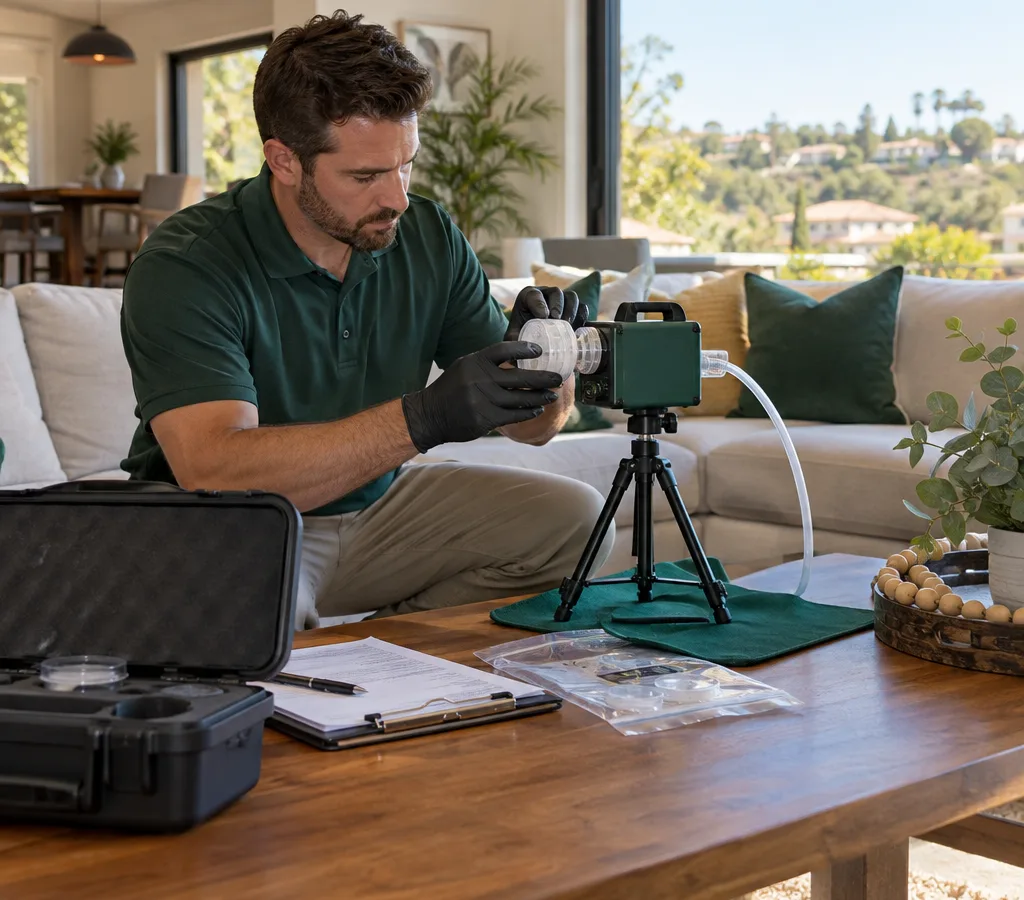
Mold Testing Mission Viejo provides indoor air sampling focused on airborne mold count Mission Viejo homeowners and property managers can understand. We collect samples carefully, document conditions that affect results—including windows, fans, and HVAC operation—and send samples to a qualified laboratory for analysis. You get written findings and straightforward guidance on what the results mean, what they do not mean, and what to do next.
Mission Viejo homes often rely on air conditioning much of the year, which means windows stay closed and indoor air is heavily influenced by HVAC airflow, filtration, and hidden moisture sources. Controlled sampling and good notes during the visit are just as important as the lab numbers.
Scope of air sampling
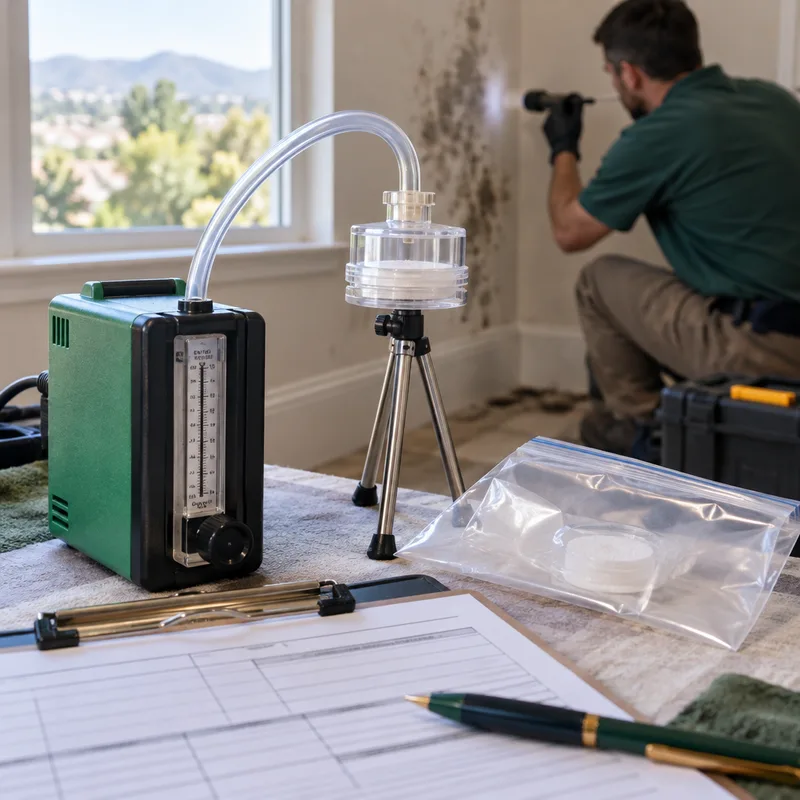
Mold air testing Mission Viejo typically uses spore trap sampling—a cassette connected to a calibrated pump—to capture airborne particles over a set period. In most inspections, we take at least one indoor sample in the area of concern and an outdoor sample for comparison, because outdoor air is the baseline source of many common spores.
When the goal is to find the source, air results are often paired with visual moisture indicators and, when appropriate, surface or cavity sampling. Broader lab-based sampling can add context when air results alone do not answer the full question.
Professional sampling standards
Air samples are only as useful as the method. We document locations, time, basic environmental conditions, and how the HVAC was operating so the lab results can be interpreted correctly.
You receive results in plain language with the key takeaways called out, including what looks typical versus what looks worth investigating further.
If results suggest an indoor amplification source, you get practical next steps, such as targeted inspection areas and what to ask any remediation contractor to confirm before work begins.
Written results help align expectations between tenants and owners, and support consistent decision-making across multiple units or properties.
We explain limitations up front. Sometimes air testing is the right first move; sometimes a moisture-focused inspection is more informative. The goal is the right data, not extra sampling.
From intake to interpretation
You tell us what you are noticing—odor, symptoms, a recent water event, or visible spotting—and which rooms are involved. We plan sampling locations that match the concern.
At the visit we confirm conditions that affect readings, including whether windows are open, fans or air purifiers are running, and how the HVAC has been operating. We also note obvious moisture indicators.
We run the calibrated pump for a set time per sample and label each cassette to maintain clean identification. An outdoor control sample is commonly collected to support interpretation.
Samples are delivered to a lab for microscopic analysis. Results typically report spore types and counts, interpreted in context with the control sample and site conditions.
We walk you through what the report indicates, where additional investigation may be warranted, and what documentation to request if further work is performed.
Visit-based pricing
Indoor air quality testing in Mission Viejo typically ranges from about $250 to $750 for an air-sampling visit, depending on how many samples are collected and whether an outdoor control sample is included. A basic setup with 1 to 2 indoor samples often sits at the lower end, while multiple rooms or larger properties with 4 to 6 samples trend higher.
Final pricing depends on sample count, accessibility—including attic or tight-room access—urgency, and whether additional sampling types are recommended. The exact cost is confirmed once the sampling plan and locations are set for your home.
Controlled air sampling matters in Mission Viejo homes where closed windows, regular air-conditioning use, HVAC airflow, filtration, and hidden moisture can all influence indoor findings.
Client experience
“We had a persistent musty smell in an upstairs bedroom. The report clearly compared indoor to outdoor air and explained what the elevated category meant. It helped us focus on one area instead of guessing and tearing things apart.”
“As a property manager, I needed something documented and easy to share. The sampling notes and lab results were organized, and the follow-up explained what to do next without pressure.”
Straight answers before sampling
Most homes start with an outdoor control sample plus 1 to 3 indoor samples placed in the areas that match the concern. If symptoms or odors are limited to one room, one indoor sample may be enough to screen that space, but multiple rooms are helpful when the issue is unclear or when comparing upstairs and downstairs airflow patterns.
For the most interpretable results, keep conditions as normal as possible and tell us what has been running. We usually note how the HVAC is operating and whether windows are open. If you use an air purifier, we may ask that it be turned off for a short period before sampling so it does not artificially lower the airborne reading.
Scheduling depends on current availability, but many clients can be fit in quickly because sampling visits are typically straightforward. Lab turnaround is commonly a few business days after sampling, and we review the results with you as soon as the report is received.
Air testing can indicate whether the air in a room looks elevated or unusual compared with an outdoor control, but it does not pinpoint the exact hidden source. If results suggest an indoor amplification source, the next step is usually targeted investigation around likely moisture areas.
Yes, it can be useful as a post-event check, especially if there was wet drywall, baseboards, or cabinetry and you want reassurance that conditions returned to normal. The most meaningful approach compares the affected area with an outdoor control and, when applicable, an unaffected indoor area.
Yes, single-room sampling is common when the concern is localized. We typically pair that indoor sample with an outdoor control sample, because outdoor air provides the reference needed to interpret whether the indoor result looks elevated for the conditions on the day of testing.
Tell us what you are noticing and which rooms are involved. We will recommend a practical sampling plan and provide lab-backed results with next steps you can use.